
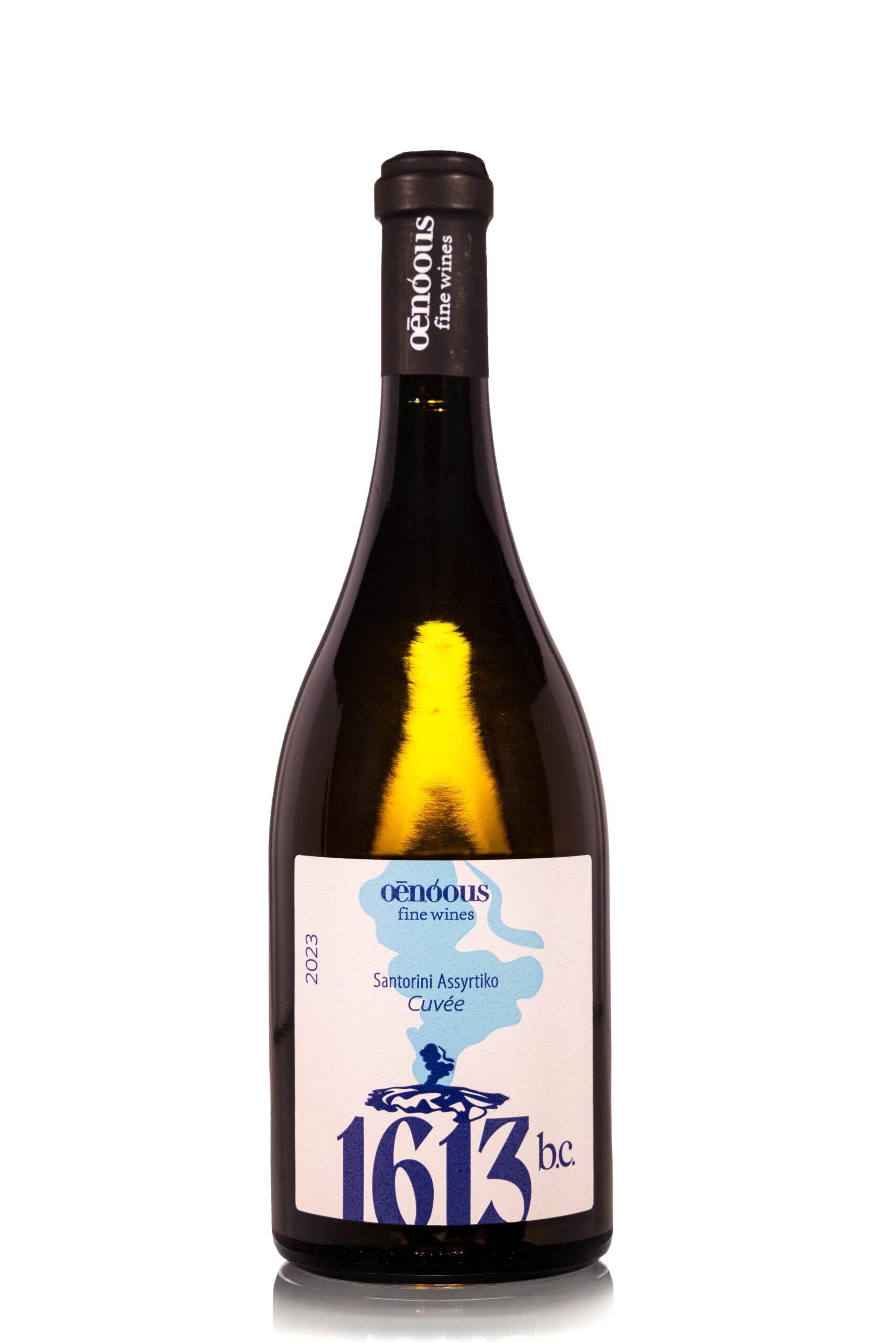
1613 b.c.
| Producer | Oenoous Fine Wines |
| Producer Description |
Category: Dry White Vinification/Aging: The gentle winemaking process involved using a vertical mechanical press to extract only the first-press juice. This was followed by fermentation and aging on fine lees for 6 months, enhancing the aromatic potential and flavor duration. Organoleptic Characteristics: The color is a pale straw-gold. The nose presents an explosive bouquet of citrus aromas, including citron-lemon, orange, and bitter orange e.t.c. |
| Color | White |
| Greek Varietal | Assyrtiko |
| Quality Category | PDO Santorini |
| Country | Greece |
| Region | Cyclades / Santorini |
| Vintage | 2023 |
| Bottle Size | 750ml |
| Dryness | Dry |
| Condition | Mild, quite |
| When to Drink | Suitable for aging |
| Flavor Profile | Intense, strict white wines |
| Pairs Exceptionally Well With | Shellfish, smoked fish, fatty fish, grilled or cooked white meats, lemon lamb, mushrooms risotto, and dishes with bottarga. |
| Pairing Suggestions | Cooked lamb with white sauce, fatty fish (grilled or baked), grilled fatty fish. |
1613 B.C. The beginning of the most exciting wine story is written with a bang:
The Santorini volcano shocks the Aegean, and, as it turned out, our senses as well. The eruption created an unparalleled landscape and the uniquely volcanic terrain of Santorini.
Volcanic ash, pumice stone, and lava form a one-of-kind terroir, which, when combined with Santorini’s microclimate (scarcity of water, strong winds, intense sunshine, and humidity), gives us an emblematic wine and famous all over the world: the Assyrtiko of Santorini.
Through the remarkable combination of the characteristics of this wine, the rich body, the sharp acidity, saline taste and the minerality, the special terroir comes through, taking off the taste. “The rest is history” or rather … a true and unforgettable pleasure!